
Introduction
ADHD is one of the most widely discussed conditions in our time, shaping how people work, learn, and navigate daily life. While stimulant medications remain the most common treatment, many are seeking gentler, natural ways to support focus, emotional regulation, and wellbeing. One mushroom that’s drawing increasing attention is Amanita muscaria, the iconic red-and-white toadstool.
In this article, I’ll explore how Amanita muscaria may relate to ADHD and focus… blending what we know from neuroscience with my own experiences and conversations with others who are curious about working with this mushroom.
ADHD, Focus, and Dopamine
Neuroscience research (such as Andrew Huberman’s work) shows that ADHD is closely linked to the brain’s dopamine system. Low dopamine in certain circuits makes it difficult to sustain attention, control impulses, and manage time.
Stimulant medications like Ritalin and Adderall work by boosting dopamine and norepinephrine, effectively helping the brain switch into a focused “task mode.” Apparently they can be very effective, particularly in children where early treatment teaches the brain what focus feels like.
However, I’m dubious of some of the research out there, the motivation behind it and lean in more to avoiding medication where possible leaning into lifestyle changes. From omega-3 supplementation to breathwork exercises and limiting phone use can also support attention… the list goes on.
This raises the question: where does Amanita Muscaria fit in?

Amanita Muscaria’s Unique Qualities
Amanita muscaria doesn’t act like a stimulant. Instead, its active compounds — muscimol and ibotenic acid — primarily affect the GABA system, the brain’s main inhibitory network. Through this calming influence, Amanita indirectly touches dopamine pathways, which may explain why some people find it supportive for focus and regulation.
Possible links to ADHD and focus:
- Calming hyperactivity & emotional sensitivity – Amanita may soften reactivity in the nervous system, which can be helpful for people who feel easily triggered or overstimulated.
- Supporting time perception – ADHD often brings “time blindness.” Some report Amanita helps them feel more grounded in the present moment, making time feel less slippery.
- Balancing focus – Rather than pushing the mind into hyperfocus (like stimulants), Amanita may create a steadier state that makes it easier to direct attention without being pulled so strongly by impulse.
- Encouraging self-regulation – Users often describe Amanita as a teacher. It doesn’t hand you focus in the way stimulants do, but it creates conditions where you can learn how to self-regulate more naturally.
If you’re curious to explore Amanita Muscaria further, you can browse our catalog here which offers a closer look at the different ways it can be experienced.
My Own Experience with Amanita and ADHD
For the first year of my Amanita journey, back in 2020 through to the end of 2021, I was primarily drinking tea … inspired by Amanita Dreamer’s work. This tea preparation is rich in muscimol, which has more sedative and calming properties.
It wasn’t until I studied with Vadim Strutzenko that I began exploring ways of working with Amanita that preserved more of the ibotenic acid. Ibotenic acid has a more stimulating quality, and I found this form of preparation far more useful for my productivity and daily tasks. Learning about this compound, and how different preparation methods shift the mushroom’s profile, was a fascinating part of my journey.
I wrote another blog about some of my reflections while working with Amanita throughout the years. No,w if you’re keen, you can read more about it here.

Shifting My Relationship with ADHD Medication
As I reflected more on how much of modern life is shaped by digital overstimulation and fractured attention, I began to see this shift in a wider context — something I explored more deeply in a separate piece on attention in the age of distraction.
Early on, I began to notice that Amanita muscaria gave me a sense of drive and groundedness that I hadn’t expected. Over time, this shifted my relationship with my ADHD medication.
Whenever I went back to my prescription meds after working with Amanita, it felt icky — almost as if my nervous system no longer wanted them. It also felt like I lacked empathy taking a bit of my soul away. Slowly, I realised I didn’t need them as often, as Amanita itself was helping me feel more stable and centred.
That said, I still occasionally use medication when I have a heavy workload or when tackling tasks that Amanita doesn’t cover for me…like accounting or other unstimulating jobs that I tend to leave until the very last minute. Amanita hasn’t replaced everything, but it has given me more choice and a sense of agency in how I manage my focus.
What I’m Hearing from Others
Although I haven’t run a survey or formal research project, most of the people I’ve consulted with or spoken to online seem to be neurodivergent — often with ADHD or autism spectrum traits.
What’s striking is how often these individuals resonate with Amanita. Many are seeking ways to regulate their nervous system, soften overstimulation, and feel more present. From these conversations, I’ve noticed a pattern: Amanita appears to meet neurodivergent people where they are, offering balance rather than pushing them into a box of “normality.”
All things considered, I do acknowledge that everyone’s mileage may vary. Not to generalize the experience for everyone else, but I would like to say that these are natural scenarios that I’ve seen myself.
If this is in any ways appealing to your interest in trying out Amanita but you’re unsure where to start, I do have an Amanita Muscaria Integration Coaching program that I developed to guide curious newcomers of Amanita to safely explore their journey and align their goals with the mushroom.
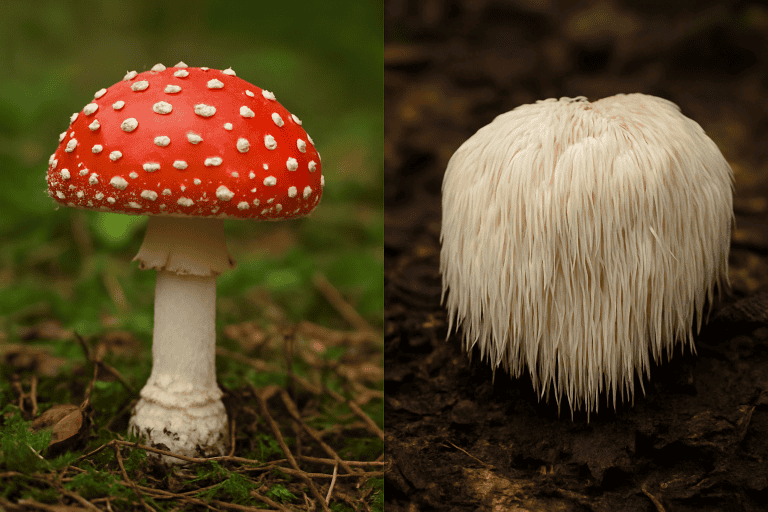
Stacking Amanita with Lion’s Mane
In more recent years, I’ve also explored combining Amanita muscaria with Lion’s Mane mushroom. Lion’s Mane is well known for supporting neuroplasticity and nerve health, while Amanita brings grounding and nervous system regulation.
Together, they create a synergy that feels both stimulating and calming — a balance that can be especially helpful for focus, learning, and creativity. For me, this combination has supported not only productivity but also a deeper sense of clarity in how I approach tasks. With this discovery, I decided to develop this special mix in capsule form, where you can also locate in our storefront.
That said, I believe this combination should only be taken once someone has worked with each mushroom individually. It’s important to be able to discern their unique energies and how they affect you before layering them together.
What We Know (and Don’t Know)
It’s important to be clear: there is no clinical research yet linking Amanita muscaria directly to ADHD treatment. What we have are anecdotes, personal experiences, and emerging community practices.
That means:
- Amanita should not be seen as a replacement for medical treatment.
- Its effects are highly individual — what grounds one person may overwhelm another.
- Safe, measured exploration is essential.
Exploring Safely
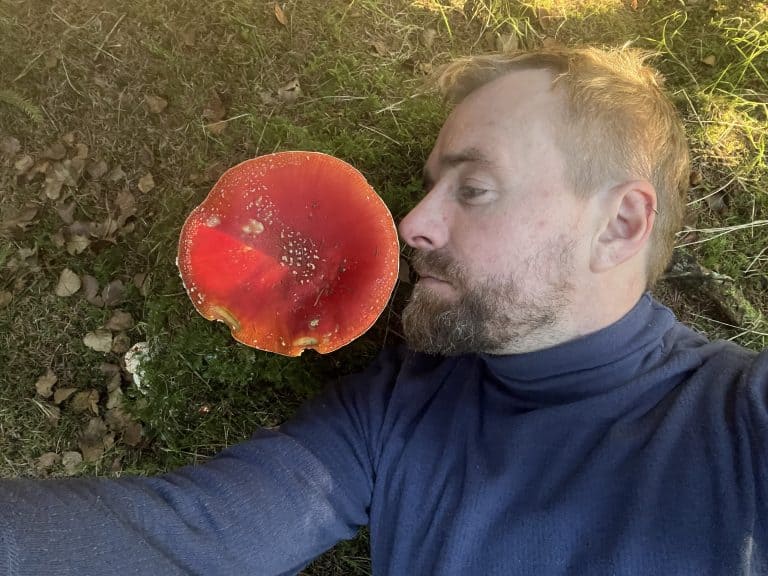
At Amanita Awakens, I source Amanita muscaria from both Ireland and Eastern Europe, selecting with care to ensure quality and consistency.
If you’re curious about microdosing, I recommend starting with my Microdosing Guide, which offers a structured way to explore gently and safely.
For more tailored guidance, you can also book a Discovery Session with me, where we can explore your unique needs and whether Amanita may support your focus and wellbeing journey.
Final Thoughts
Amanita muscaria is not a magic bullet for ADHD. It won’t “cure” distractibility or replace every tool in the focus toolkit. But from my own experience and from the patterns I’m seeing in my community … it has the potential to help people feel more grounded, more present, and less at the mercy of their nervous system.
In a world that constantly pulls at our attention, Amanita may offer a gentle ally for those who want to cultivate a steadier, more balanced relationship with focus. And when combined thoughtfully with Lion’s Mane, it may open an even richer path for neurodivergent individuals seeking clarity, balance, and creativity.
Safety Disclaimer
These dried caps sold on this website are not intended for human consumption. We do not promote consuming them, and if you choose to eat them, you do this at your own risk. We withdraw ourselves from any responsibility in the outcome of this action.
